 Skip-the-line available
Inside the Honmaru Palace at Nijo Castle
A princely palace moved across Kyoto in the 1890s and reopened in 2024 after 18 years: what you'll see inside, what's on show and the house rules.
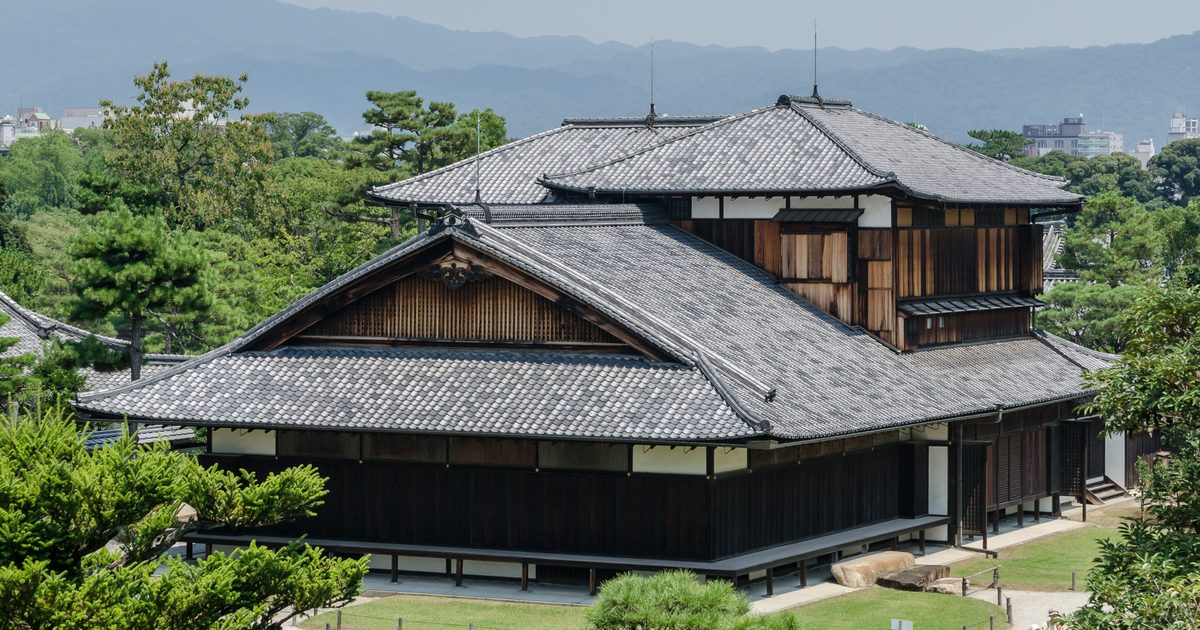
Plenty of visitors see the Ninomaru Palace and walk out without realising there's a second palace on the far side of the grounds. The Honmaru Palace, or Honmaru-goten, was never a Tokugawa building. It was the home of an imperial princely house, the Katsura-no-miya, moved here in 1893 and 1894, and it reopened to the public on 1 September 2024 for the first time in 18 years. It's the only large Edo-period palace of an imperial family branch that still survives. Inside you'll find audience rooms, a two-storey living quarters, gold-ground paintings and a set of rooms that only open in rotation. This guide walks you through the history, the rooms and painters, what's showing through 2026 and early 2027, and the house rules worth knowing before you take your shoes off.
A palace that moved across Kyoto
The Honmaru area dates from 1626, when the castle grounds were extended west for Emperor Go-Mizunoo's visit. Its first palace burned down in the great fire of 1788. A temporary palace built by Yoshinobu later stood here, but it was demolished around 1881, leaving the Honmaru without a palace for a few years. That gap is part of why the site was free for what came next.
In 1884 the castle became the Nijo Imperial Villa, known as Nijo Rikyu. Then in 1893 and 1894 the main parts of the Katsura-no-miya palace, which stood north of the Kyoto Imperial Palace inside Imadegawa Gate, were moved here. The buildings that came across were the Genkan, the Goshoin, the Otsune-goten, the Daidokoro and the Kari-no-ma. The Otsune-goten was turned 90 degrees in the process.
The buildings are older than the move. They went up in stages at their original site, from 1790 to 1793 and on through to 1849. Once they arrived at Nijo, carpets were laid over the tatami, and chandeliers and other modern fittings went in. That's why some rooms mix Edo-period painting with touches you wouldn't expect in a palace of this age.
Why the Honmaru Palace matters
The Honmaru Palace is the only large Edo-period palace of an imperial family branch to survive, and it's designated an Important Cultural Property. It has quite a guest list too. Emperor Meiji and the Empress visited, and Emperor Taisho and Emperor Showa both came here as Crown Princes. That's quite a roll call for a building that started life somewhere else entirely, on a site north of the Kyoto Imperial Palace.
That gives it a different character from the Ninomaru Palace. Where the Ninomaru belongs to the Tokugawa story of the castle, the Honmaru was a princely family's home, with rooms for receiving guests alongside rooms for everyday living and the turning of the seasons. Seeing both on the same day is the best way to feel the contrast. Many people find the Honmaru the more personal of the two.
It's also more intimate. The Honmaru Palace covers about 1,600 square metres, and only around 15 people are admitted at a time. Add the fact that it was closed for 18 years before full-scale repairs finished at the end of March 2024, and you can see why so many repeat visitors to Kyoto have never been inside. Now that it's open again, it's well worth the extra planning.
The main rooms
The Genkan is the entrance hall, about 60 square metres, and the natural start of the building. The Goshoin holds the audience rooms: Ichi-no-ma, Ni-no-ma and San-no-ma. The San-no-ma could be turned into a Noh stage, a good reminder that these rooms were made for entertaining as well as for formal business. Take a moment to picture the San-no-ma set up for a performance.
The Otsune-goten is the two-storey living quarters, and for many people it's the heart of the visit. Upstairs is a sukiya-style room built for views over the grounds and the city. Its paintings date from 1862, when Princess Sumiko became head of the house, so they mark a particular moment in the family's history. Of all the buildings, it's the one that feels most like a home rather than a place of ceremony.
Within the Otsune-goten are the Shiki-no-ma, four rooms set out in a four-square plan with one room for each season, and the Unkaku rooms, named after their cloud-and-crane paper. The Daidokoro is usually not open. The Kari-no-ma takes its name from its flying geese, which are worth a slow look if they're on your route. Which of these rooms are open depends on the rotation, covered below.
The painters and the painted doors
Look out for Shokaku-zu, pine and cranes painted on powdered gold by Kano Eigaku, ninth head of the Kyo Kano school. Gold grounds change with the light, so give your eyes a moment to adjust indoors and look at the panels from a couple of angles before you move on. Whether you see it depends on the rooms open during your visit.
Alongside it is Shiki Soka-zu, flowers of the four seasons, by Nakajima Raisho of the Maruyama school. Seen on the same visit, the two give you a feel for the range of painting a princely household could call on: the formal gold of the Kano line on one hand, the Maruyama school's flowers on the other. Again, what's on view depends on which rooms are open when you go.
Then there are the Sugito-e, 14 sets of painted cedar doors. To protect them, only one set is shown at a time, and it changes every six months. That means the doors you see depend on when you go, and two visits a year apart may show you entirely different panels. It's a small reason to come back, and a good one.
Rotating Otsune-goten rooms: the 2026 to 2027 schedule
To protect the original paintings, the Otsune-goten rooms open in rotation. You won't see every room on a single visit. If one room in particular matters to you, choose your date around the schedule rather than finding out on the day that it's resting. The castle publishes the rotation for each financial year, and the dates below are the ones set for 2026 to 2027.
From 19 September to 15 November 2026, the rooms on show are the Shokaku-no-ma, Kiji-no-ma and Onnando. From 18 November 2026 to 14 March 2027, it switches to the Shikisoka-no-ma, Kousaku-no-ma, Hagi-no-ma and Okesho-no-ma. From 17 March to 18 April 2027, the Shokaku-no-ma, Kiji-no-ma and Onnando are back on show. Each set stays on show for weeks at a time, so you have plenty of dates to choose from within each period.
Notice the short gaps between those periods. Both 16 and 17 November 2026 and 15 and 16 March 2027 fall on the Honmaru's regular third-Monday closures, so the palace is shut anyway. If you're torn between two dates either side of a changeover, pick the period with the rooms you most want to see. When you book, simply check that your date falls inside the period you want.
The Honmaru Garden and the view from the keep
The Honmaru Garden was first laid out after the palace was moved here. In 1895 Emperor Meiji ordered it remade, and what you see today follows that plan: lawns, winding paths, flat stones and an artificial hill called the tsukimidai. It's a quieter, more open garden than the pond garden at the Ninomaru. Follow the winding paths round rather than cutting across, and you'll see the palace from several sides.
On a clear day you can see Mt Hiei behind the palace. After forty minutes of dim interiors, the garden is a good place to slow down and let what you've just seen settle. Allow a little time for it when you plan your day, rather than rushing straight on to the next thing. On a busy day, it's also a good spot to regroup with the rest of your party.
For a view down over the palace and garden, climb the stone base of the old keep. The keep itself was destroyed by lightning in 1750, but the base still gives views over the Honmaru Palace, its garden and the city beyond. It's one of the best spots in the castle for photographs, since outdoor photos are fine. Bring your camera out again here.
How a Honmaru visit works
Honmaru places are timed and capped, and they have to be booked ahead. Web tickets go on sale 30 days before the visit date, and the Honmaru ticket doesn't include castle admission, which is why our fares bundle both. Enter the castle at least 20 minutes before your time. The walk from Higashi Ote-mon is about 850 metres, 15 to 20 minutes.
Reception at the entrance is in order of arrival, so you may wait. Shoes and bags go into lockers inside the palace, and bags larger than 35 by 35 by 50 centimetres go to the baggage room in the main rest area. Then there's a guidance video of about eight minutes, after which you follow the route at your own pace.
Viewing takes about 40 minutes. There are no guided tours inside the Honmaru, so if you like context, read up beforehand; this guide is a decent start. Late arrivals may be refused, with no refund, so don't cut your timing fine. Aim to be early rather than exactly on time, because reception is in order of arrival. Once you're inside, the pace is yours, within the 40 or so minutes the visit usually takes.
House rules inside the palace
No shoes inside, and socks must be worn. Wear socks you're happy to be seen in, and in the colder months a thicker pair is a kindness to yourself, since old palaces rarely feel warm underfoot. Slip-on shoes make the locker stop quicker for everyone. Socks with holes are the classic Nijo regret. Keep a spare pair in your bag if you've been walking in the rain.
Don't touch the pillars, walls, sliding doors or shoji, and don't step on the edges of the tatami. These are original surfaces, and the rules are taken seriously. No photos or video are allowed inside, and neither is food or drink, so finish your water before you go in. Keep your hands to yourself, even when pointing out details to someone, so nothing brushes the painted surfaces.
Wheelchair users transfer to a palace wheelchair, and some areas, including the Honmaru, have no ramps, so there's a detour. Free power-assist wheelchairs are available at the General Information Desk. Only guide dogs are allowed in the castle, so other animals will need to stay behind. If anyone in your group has limited mobility, allow extra time on the day for the detour and the transfer.
Frequently asked
Is the Honmaru Palace open to visitors?
Yes. Full-scale repairs finished at the end of March 2024, and it opened to the public on 1 September 2024 for the first time in 18 years. It closes on the third Monday of each month and the day after.
Does the Honmaru ticket include the Ninomaru Palace?
No. The Honmaru ticket includes neither castle admission nor the Ninomaru Palace. Our fares combine the timed Honmaru ticket with castle admission and the Ninomaru Palace for each visitor.
How long does the Honmaru Palace take?
About 40 minutes of viewing, after a guidance video of around eight minutes. Add the walk from the East Gate, any wait at reception and time in the Honmaru Garden.
Can I take photos inside the Honmaru Palace?
No. Photos and video aren't allowed inside. Outdoor photos are fine, and the keep base gives a good view over the palace, but tripods, monopods and drones aren't allowed.
Are there guided tours inside the Honmaru Palace?
No. There are no guided tours inside the Honmaru. You watch a guidance video of about eight minutes and then walk the route at your own pace.
Which Otsune-goten rooms are open in winter 2026 to 2027?
From 18 November 2026 to 14 March 2027 the rooms on show are the Shikisoka-no-ma, Kousaku-no-ma, Hagi-no-ma and Okesho-no-ma. Other rooms rest during that period to protect the paintings.